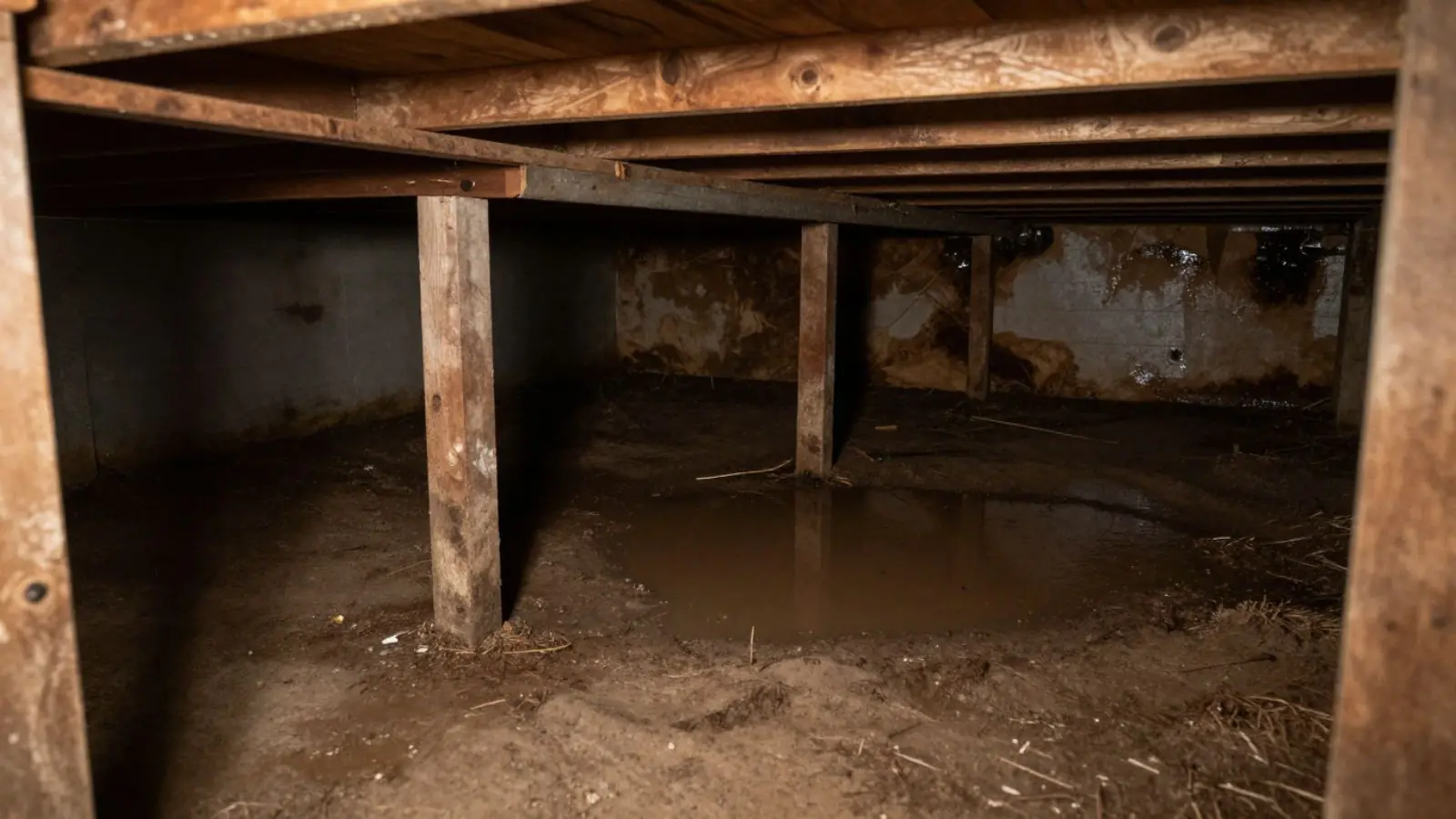
Standing water under the house: do this first
Crawl space water damage means water has collected in the shallow space beneath a raised floor, where it can wet insulation, wood joists, the subfloor and any pipes or ducts hanging there. If you see standing water through the access hatch, or your floors feel soft and smell damp, call the 24/7 emergency line at (562) 271-5850. If a crew is open today it can be sent today, and the call will not include a promised arrival time.
Shut off the main water valve if a pipe could be the source. Do not climb into a wet crawl space. Wiring, junction boxes and sometimes a furnace or water heater share that space, and a flooded crawl is tight, dark and hard to leave in a hurry.
This page applies to raised foundations only
Slab-on-grade and raised-foundation homes are both common in Southern California. Many Santa Fe Springs houses sit on a concrete slab and have no crawl space at all, so if that describes yours, the better page is slab leak water damage. This page is for houses with a raised floor and an access hatch, usually in a closet, hallway or on an exterior wall.
If you are unsure, look for a small foundation vent along the base of the house or a square hatch in the floor. A basement is a different structure, and basements are uncommon in this area. Do not assume you have one.
Water still spreading? The dispatch line is open 24 hours a day.
☎ Call (562) 271-5850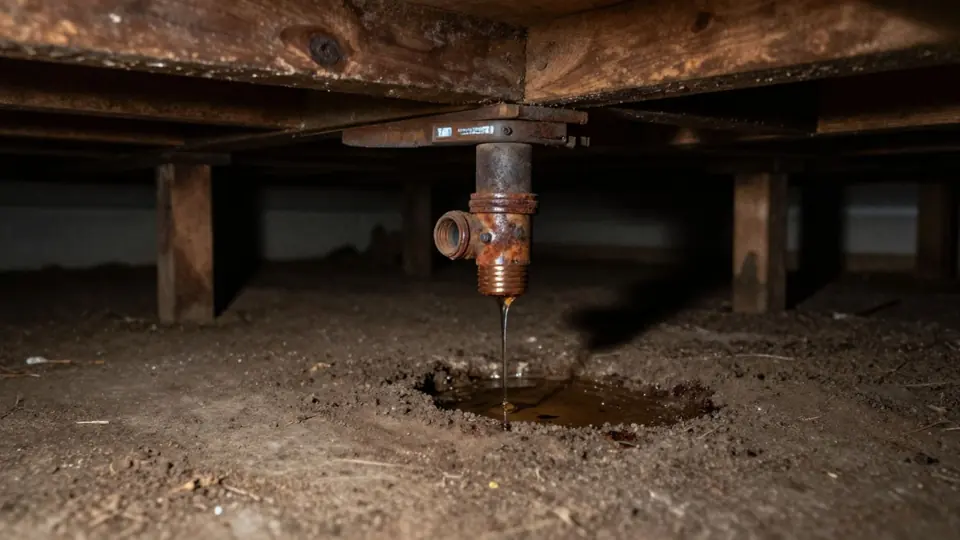
Where the water comes from
The city's draft Safety Element puts the water table more than 50 feet below the surface citywide. That means standing water under a Santa Fe Springs house is usually a leak or surface runoff, not groundwater rising from below. Finding which one matters, because a leak keeps adding water until it is stopped.
The National Weather Service normals for the Los Angeles area show most rain falling in winter. January averages 3.29 inches and February 3.64, and June through August are almost dry. A crawl space that stays damp only in winter points to drainage around the house, while one that is wet in summer more often points to a supply line, drain line or an irrigation problem. Those readings come from a downtown Los Angeles station, not Santa Fe Springs itself.
Signs water is under your floor
A crawl space hides trouble, so the clues show up above it.
- ✓Cupped or buckled hardwood. Boards crown or lift when the subfloor below stays wet.
- ✓A musty smell near floor vents. Air from the crawl space moves up through gaps and ducts.
- ✓Soft or springy floor spots. Wet plywood and joists lose stiffness.
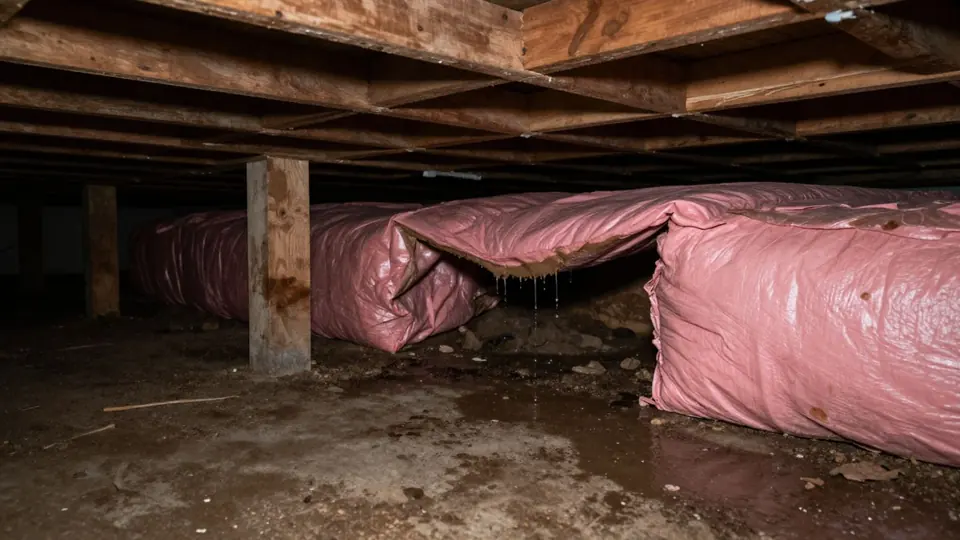
- ✓Sagging insulation or dark stains on it. Wet batts droop and trap moisture against the wood.
- ✓A meter that moves with fixtures off. A leaking pipe under the house keeps the dial turning.
Any one of these deserves a look. Two or three together mean calling soon, since wet wood framing and insulation can stay damp for a long time.
Safety before anyone looks under the house
Treat the crawl space as an electrical and confined-space hazard. If water is near wiring or a panel, stay out and call the utility or 911 before you call the restoration line. Cut power only if the panel can be reached dry, and leave any gas smell to the utility.
If the water is dark, smells like sewage or came from a backed-up drain, it is contaminated and needs a professional. Keep children and pets away from the hatch. Our page on sewage backup cleanup covers that case.
How the water is removed and the framing dried
Crews start by finding and stopping the source, or confirming the plumber has stopped it. Submersible pumps and wet vacuums remove standing water, then wet insulation and torn vapor barrier come out and are hauled away. Moisture meters check joists and subfloor, and thermal imaging cameras show wet areas above the crawl as well.
Air movers and LGR dehumidifiers are set to dry the framing and subfloor, sometimes by ducting air into the crawl space through the access hatch. Hardwood above may need drying mats. Readings are repeated until wood matches dry reference readings under the published ANSI/IICRC S500 standard. The full process is on our structural drying and dehumidification page.
What a wet crawl space tells you
The source and the season give the first clue. This table sorts the usual patterns.
| What you find | Likely source | First move |
|---|---|---|
| Clear water pooled near one pipe | Supply line or fitting leak | Shut off the main, call a plumber, then pump and dry |
| Water along the outer wall after rain | Surface runoff or a blocked drain | Clear gutters and drains, then pump and dry |
| Damp soil and a wet spot below a bath | Drain line or toilet seal leak | Plumber first, then remove wet insulation and dry |
| Dark or smelly water | Sewage backup | Stay out, call a professional, no fans until known clean |
A plumber finds the leak. We handle the water, insulation and drying.
The 24 to 48 hour window and mold
The EPA advises drying water-damaged areas within 24 to 48 hours to prevent mold growth, and states that mold will not grow without water or moisture. Crawl spaces make that hard because air barely moves and wood absorbs water slowly.
If dark growth appears on joists or the subfloor, fixing the water problem comes first. Testing and cleanup follow ANSI/IICRC S520 and are scoped separately under mold remediation. Health questions belong to a physician.
Crawl space water and insurance
Insurers often treat a sudden pipe break differently from slow seepage over months. Sudden and accidental water damage is often covered, while gradual leaks and neglect often are not. Check your policy and ask your insurer before work starts.
Rain that runs under a house may be treated as a flood or surface water event, and the California Department of Insurance says standard homeowners insurance does not cover flood damage. Photograph the space before anything is removed.
What affects crawl space cleanup cost
Scope drives the cost, and the space cannot be judged from the hatch alone. These factors matter most.
- ✓Water category and whether it is clean or contaminated
- ✓Square footage of the crawl and how tight the access is
- ✓How much insulation and vapor barrier must be removed
- ✓Number of drying days and pieces of equipment
- ✓Rebuild scope for subfloor, flooring or framing
Want your real number? Call and describe the loss, and the scope and price are explained before work starts.
Mistakes that keep a crawl space wet
Quick fixes hide moisture instead of removing it.
- ✓Leaving wet insulation in place because it looks fine
- ✓Sealing the crawl space before the wood is dry
- ✓Running only a household fan in a wet hatch
- ✓Ignoring a musty smell after a leak is fixed
Local, licensed and insured
We are licensed and insured, and scope and price are explained before work starts. We serve Santa Fe Springs and nearby towns, including Downey, La Mirada, Whittier, Norwalk and Pico Rivera.
If a broken line caused the flood under your floor, you may also want to read about burst pipe water damage. Ask the city's Building and Safety Division whether any repair to framing or plumbing needs a permit.
Frequently asked questions
Yes. The emergency line is answered 24/7, including nights and weekends. Crews are sent the same day when available and no arrival time is promised, so stay out of the crawl space and shut off the main valve if a pipe is leaking.
The line is answered around the clock, and crews are dispatched the same day when available. We pump out water, remove wet insulation and dry the framing. A plumber repairs the leak.
Probably not. Many local homes are slab-on-grade with no crawl space. This page applies to raised foundations with a hatch or foundation vents.
The city's draft Safety Element puts the water table more than 50 feet down, so standing water usually comes from a leak or runoff. A plumber can test the lines, and a drainage check around the house helps rule out rain.
It depends on how much water reached the framing and how wet the wood is. Many jobs take several days of air movers and dehumidifiers. We check readings and stop when materials match dry reference levels.
Restoration is not waterproofing. It dries what got wet. If rain or a leak keeps feeding the space, the source must be fixed by a plumber, a drainage contractor or a roofer.