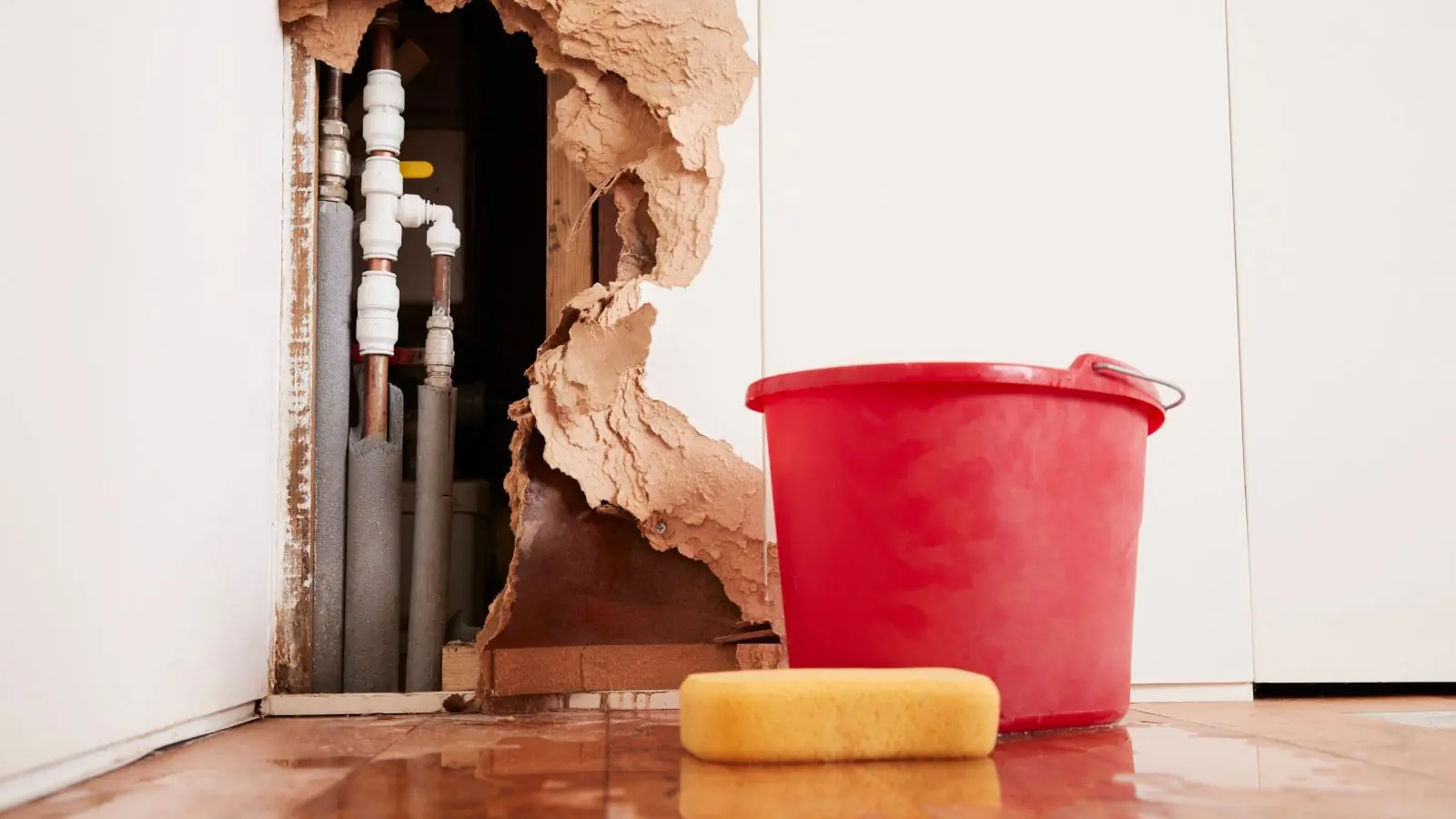
Burst pipe emergency: act in this order
Burst pipe water damage is the wetting of floors, walls, ceilings and contents by pressurized water from a split or broken supply line. If water is still flowing, call the 24/7 emergency line at (562) 271-5850 and keep reading while you wait. Crews go out the same day when they are available, though no arrival time is promised.
Close the main water valve first, usually near the front hose bib or beside the water heater. Turn it clockwise until the flow stops, then open the lowest faucet to drain the lines. Lift rugs, laptops and paperwork off the floor, and keep children and pets out of the wet rooms.
Why a pipe failure floods so fast in local homes
Supply lines are pressurized all day, so a split does not drip. It sprays. The city's Water Utility Authority says tap water in Santa Fe Springs comes from groundwater and imported surface water, and either source reaches your house under pressure. That means a failed fitting keeps pushing water until someone closes the main valve, so know where yours is before you need it.
Santa Fe Springs mixes older residential blocks with industrial and commercial buildings, and many homes are slab-on-grade while others sit on raised foundations. On a slab, a split line in the attic or wall sends water down inside the cavity and out across the floor. On a raised foundation, water often drains into the crawl space and soaks the subfloor from underneath where you cannot see it.
Water still spreading? The dispatch line is open 24 hours a day.
☎ Call (562) 271-5850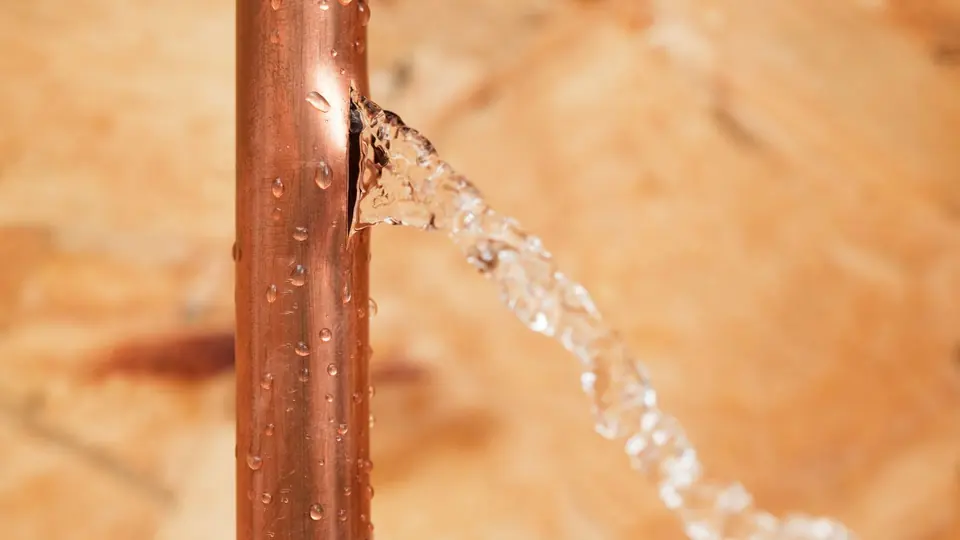
Signs a pipe has burst, even when you cannot see it
The obvious case is a spray or a flooded room. The quiet cases are just as costly, because water keeps traveling after the visible puddle is mopped.
- ✓A water meter that keeps moving. With every fixture off, a spinning dial or a changing digital reading means water is leaving the system somewhere.
- ✓Hissing or running sounds in a wall. Pressurized water escaping a pinhole or split makes a steady sound even at night.
- ✓Stained or bubbling paint. Paint that blisters or a brown ring on a ceiling means water has been behind the surface for a while.
- ✓Warm or damp flooring. A warm patch on tile or a soft spot on laminate can point to a leaking hot line below.
- ✓A sudden drop in water pressure. Weak flow at every tap often means a line has failed upstream of the fixtures.
Burst pipe safety: what to do before anyone arrives
Water and electricity do not mix, so check the room before you enter. If water is running down a wall that holds outlets, or dripping from a ceiling light fixture, stay out of that room. Call the utility or 911 for any electrical or gas risk before you call the restoration line.
Cut power to the wet area only if the breaker panel can be reached on dry floor. If the panel itself is wet, leave it alone. Photograph the damage, the broken section and any ruined belongings before you move things, because your insurer will ask for them. If the water looks dark or smells foul, treat it as contaminated and keep people out.
How we find the water and dry the structure
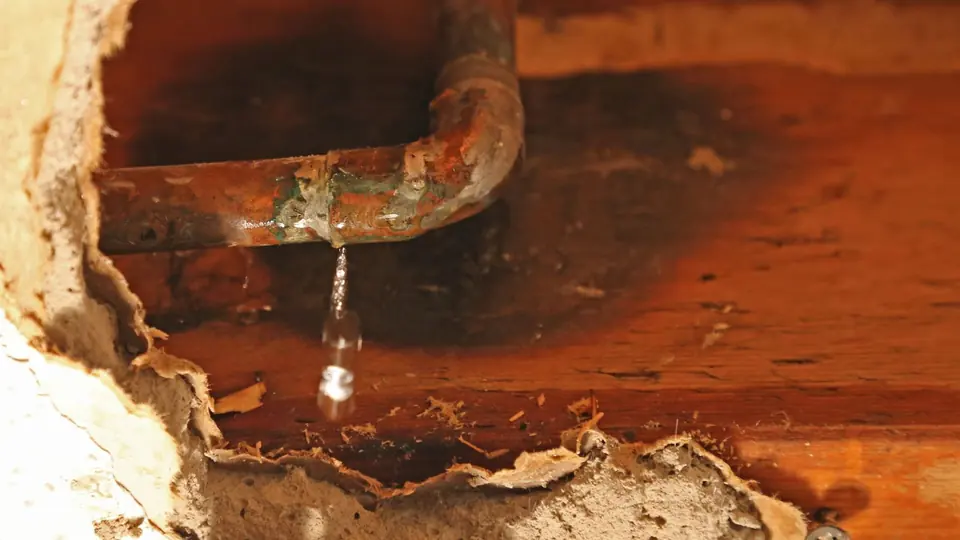
The first visit starts with questions about where the water came from and how long it ran. We scan with moisture meters and a thermal imaging camera, which shows cool, wet areas behind drywall and under flooring without cutting anything open. Readings are logged so the starting point is documented.
Extraction units and wet vacuums remove standing water, then wet baseboard, soaked insulation and ruined carpet pad are pulled. Air movers and LGR dehumidifiers are set to dry floors, wall cavities and framing, and we check readings every day until they match dry reference materials. ANSI/IICRC S500 is the published reference standard for this work, and you can ask any company how it applies the standard.
A plumber repairs or replaces the broken line. We handle the water damage, and your plumber handles the pipe. Coordinating the two visits keeps walls from being closed before they are dry.
Where the water went and what we do about it
| Situation | What the water does | What we do |
|---|---|---|
| Split line under a sink | Fills the cabinet base and runs under flooring | Extract, pull the cabinet toe kick and dry the subfloor |
| Pipe burst inside a wall | Soaks insulation and the bottom plate | Thermal scan, open a controlled section, dry the cavity |
| Attic line or fitting failure | Drips through the ceiling below | Remove wet ceiling material, dry the framing above |
| Slow pinhole leak found late | Long, low moisture in one area | Map the wet zone, dry it and check for mold risk |
Every loss differs, so scope is set after an on-site assessment.
Insurance and a burst pipe: how coverage usually fits
Sudden and accidental water damage, such as a pipe that splits without warning, is often covered under a homeowners policy. Gradual leaks and long-term neglect often are not. The California Department of Insurance states that standard homeowners insurance does not cover flood damage, which is a different event from a plumbing failure.
Check your policy and ask your insurer what applies to your loss. We document moisture readings, photos and the work performed. We cannot promise any claim outcome.
What drives the cost of a burst pipe cleanup
The final scope depends on a handful of real factors, and none of them can be known from a phone description alone.
- ✓The water category, since clean supply water is handled differently than water that has touched contaminated materials
- ✓How many rooms and how much square footage got wet
- ✓The materials involved, such as hardwood, carpet, drywall or plaster
- ✓How many days of air movers and dehumidifiers the structure needs
- ✓Whether wet drywall, insulation or flooring must be removed and rebuilt
Want your real number? Call and describe the loss, and the scope and price are explained before work starts.
Mistakes that make a burst pipe loss worse
- 1Waiting until morning to call while the carpet pad stays soaked
- 2Running a household fan on a wall that has not been scanned for moisture
- 3Painting or patching a stain before the cavity behind it is dry
- 4Throwing away wet items before photographing them for your insurer
Local, licensed and insured
We are licensed and insured, and you hear the scope and price before any work begins. About 60.6 percent of Santa Fe Springs households own their homes, according to Census QuickFacts, so many callers are owners deciding what to repair themselves and what to hand off. The city's Building and Safety Division says appropriate permits must be obtained before any project that includes repairs, so ask the division whether your plumbing fix or rebuild needs one.
We serve Santa Fe Springs and nearby towns, including Whittier and Norwalk. If you also need the standing water pumped out first, see our emergency water removal page, and for the pipe that feeds many floods, read about water heater leak cleanup.
Frequently asked questions
Yes. The emergency line is answered 24 hours a day, including nights, weekends and holidays. Crews are dispatched the same day when they are available, and no arrival time is promised. While you wait, shut off the main valve and keep people away from wet electrical areas.
The line is answered 24/7 and crews are dispatched same day when available. We do not promise an arrival time because it depends on where crews are and what other calls are active. Call, describe what is happening and we will tell you what to do first.
Drying commonly takes several days, and the time depends on how far the water spread and which materials got wet. Equipment stays until moisture readings match dry reference materials. The EPA advises drying water-damaged areas within 24 to 48 hours to prevent mold growth, which is why calling early matters.
Sometimes, but not always. Drywall can often be dried in place if it has not swollen and the seams are intact. A thermal camera and moisture meter show whether a wall can be dried or whether wet insulation behind it must come out.
Only if you can reach the panel without stepping in water. If water is near outlets, light fixtures or the panel, stay out and call the utility or 911 before you call us. Never touch electrical equipment while standing in water.