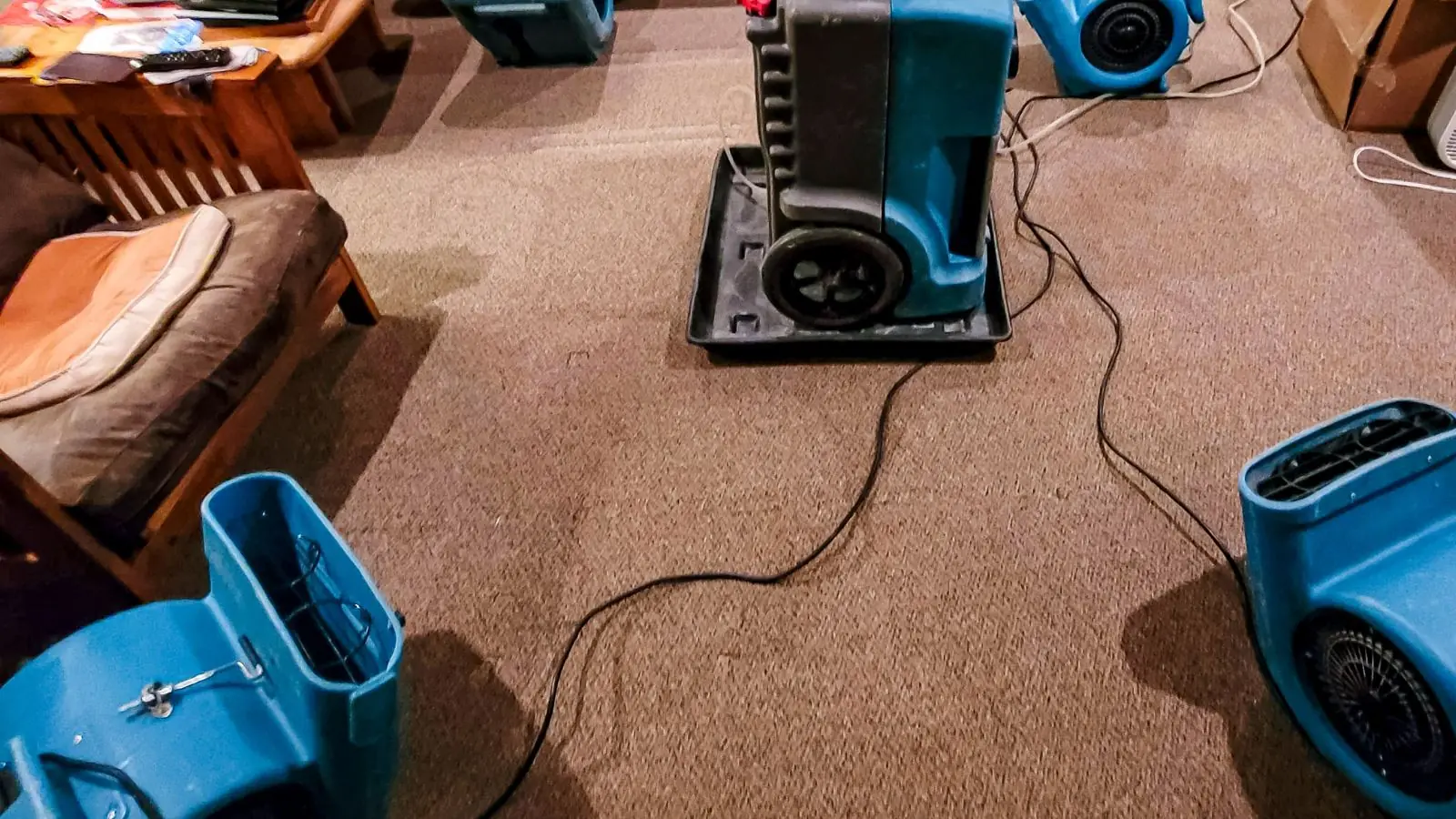
What structural drying actually does
Structural drying is the controlled removal of moisture that has soaked into building materials such as drywall, baseboard, subfloor, framing and concrete. In a Santa Fe Springs home it usually starts after a pipe, appliance or roof leak has been stopped and the visible water has been extracted. Wet materials hold water long after the puddle is gone, and that hidden moisture is what causes swelling, odor and mold later.
The method is simple in principle. Air movers push dry air across wet surfaces so water leaves the material as vapor. Dehumidifiers then pull that vapor out of the room so it cannot settle on the next cold surface. Meters track the progress every day until the readings match dry reference materials.
Why drying equipment matters all year in Santa Fe Springs
National Weather Service normals for this area show about 14.25 inches of rain a year, with almost none from June through August. That dry summer fools many owners into thinking a wet room will dry itself. Indoors, a closed-up room with wet drywall behind a vanity stays damp for weeks, no matter how sunny it is outside.
The practical point is that the winter rain season adds humidity and roof intrusions, but burst lines and appliance leaks happen in any month. Equipment drying works on the same timeline in July as in January, so call when the water appears and not when the weather turns.
Water still spreading? The dispatch line is open 24 hours a day.
☎ Call (562) 271-5850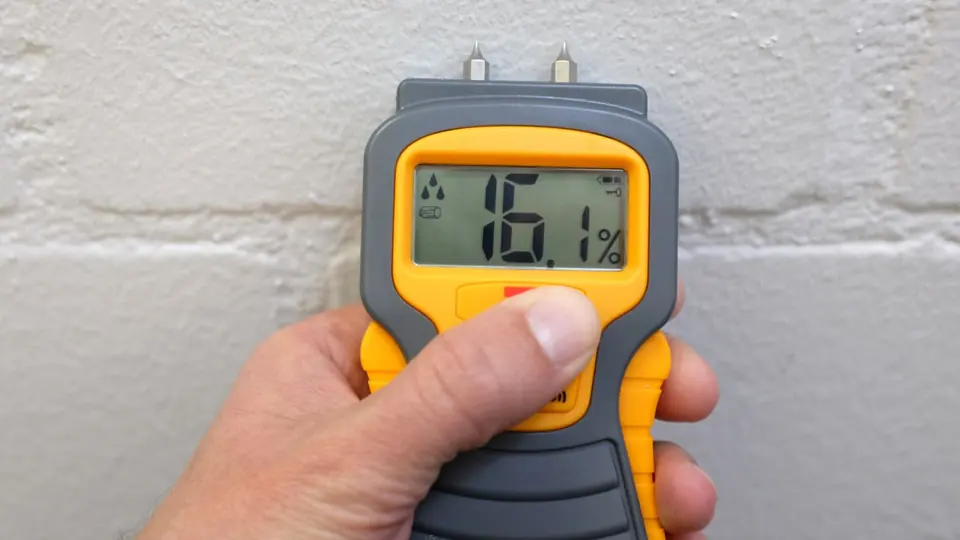
Signs the structure is still wet
Surfaces that look dry can still hold water. These are the signs that tell a crew to keep drying, and they are worth checking yourself while you wait for a visit.
- ✓Baseboards that have lifted or stained. Paper-faced drywall wicks water upward, so a wet base often means the wall cavity behind it is wet too.
- ✓Floors that cup, crown or feel soft. Hardwood and laminate absorb moisture at the edges first and swell before the surface looks wet.
- ✓A musty smell in a closed room. Odor means moisture is trapped somewhere, often in insulation or the bottom plate of a wall.
- ✓Paint that bubbles or peels. Water is moving through the wall toward the finish, and the layer behind the paint is still damp.
- ✓Windows that fog or walls that feel cool and clammy. Humidity in the air is still high and needs a dehumidifier, not just open windows.
Electrical and moisture safety before drying starts
Water and power do not mix, and drying equipment adds more cords to a wet room. If water has reached outlets, a panel or a ceiling light, stay out, cut power only if the panel can be reached dry, and call the utility or 911 for any electrical or gas risk before you call the restoration line.
The 24/7 emergency line at (562) 271-5850 takes the call once you are safe. Same-day service happens whenever crews are open, but arrival times are not promised. Do not run household fans in a room that may hold sewage, because fans spread contaminated moisture. The EPA says not to use fans before determining that the water is clean or sanitary.
How the drying process runs, day by day
A structural drying job follows a plan, not a guess. Each stage uses specific tools and ends with a measurement.
- 1Map the moisture. Moisture meters and thermal imaging cameras find wet drywall, subfloor and framing, including areas behind cabinets that the eye misses.
- 2Remove what cannot dry. Soaked pad, insulation or swollen drywall is cut out and bagged so it stops feeding the humidity in the room.
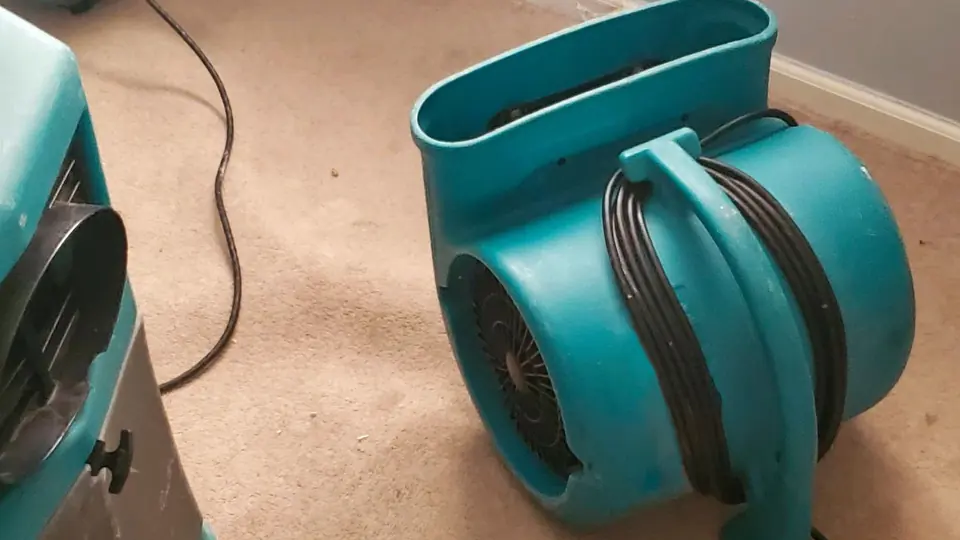
- 3Set air movers and dehumidifiers. Air movers go low and angled across floors and walls. LGR dehumidifiers pull vapor from the air in a closed room.
- 4Read the meters daily. Readings are logged each visit and equipment is moved or removed as sections reach dry reference levels.
- 5Confirm dry and pull equipment. Drying is finished when the structure matches dry reference materials, and the equipment leaves only then.
The published reference for this work is ANSI/IICRC S500, which any company should be able to explain when you ask how it decides a structure is dry.
Dry in place or tear out: how the decision is made
Not every wet material has to be thrown away. The choice depends on the material, how long it stayed wet and what kind of water soaked it.
| Material | Often dried in place when | Usually removed when |
|---|---|---|
| Drywall | No obvious swelling and the seams are intact | It is swollen, soft or the water was contaminated |
| Hardwood floor | Wet a short time and boards have not cupped | Cupping, crowning or finish failure is spreading |
| Carpet and pad | Clean water and found early | Pad is soaked through or the water was dirty |
| Framing and subfloor | Meter readings fall steadily with air movement | Readings stay high after days of drying |
| Insulation | Rarely, since it holds water | Almost always when it is wet |
The EPA says drywall may be dried in place if there is no obvious swelling and the seams are intact. If not, it should be removed and replaced.
Wet carpet has its own timeline, and the page on wet carpet drying explains when a pad can be saved and when it cannot.
Why the 24 to 48 hour window drives the schedule
The EPA advises drying water-damaged areas and items within 24 to 48 hours to prevent mold growth, and it notes that mold does not grow without moisture. That window is the reason equipment goes in quickly and why waiting a weekend to see if things dry out is a gamble.
Insurance and drying documentation
Sudden and accidental water damage, such as a supply line that breaks, is often covered by a homeowners policy, while gradual leaks and neglect often are not. The California Department of Insurance states that standard homeowners insurance does not cover flood damage, and NFIP flood coverage is sold separately. Check your policy or ask your insurer which category your loss falls into.
What affects the cost of drying
Drying cost is set by how much structure is wet, not by a flat rate. Five factors move the number.
- ✓Water category, since contaminated water needs removal and sanitizing before drying
- ✓Affected area and how many rooms, floors or wall cavities hold moisture
- ✓Materials involved, because concrete and hardwood dry much slower than carpet
- ✓Drying days and the amount of equipment running each day
- ✓Rebuild scope after drying, including drywall, flooring and paint
Want your real number? Call and describe the loss, and the scope and price are explained before work starts.
Mistakes that slow drying
Small habits can add days to a drying job.
- ✓Turning off the dehumidifier overnight to save noise, which lets humidity climb again
- ✓Opening windows while equipment runs, which brings humid air into a sealed drying room
- ✓Moving air movers or unplugging them to vacuum
- ✓Painting or sealing walls before readings are confirmed dry
- ✓Skipping the wall cavities because the surface feels dry to the touch
Local help in Santa Fe Springs and nearby towns
Santa Fe Springs Water Damage Pros is licensed and insured, and the scope and price are explained before work starts. The same crews cover Santa Fe Springs and nearby towns, including Whittier, Norwalk, Downey, La Mirada and Pico Rivera. If a wet wall is in a neighboring city, see the Whittier service area page.
If the water is still coming in, start with water mitigation to stop the loss, and drying follows. The city's Building and Safety Division can tell you whether repairs after drying need a permit, since city rules say appropriate permits must be obtained before alterations or repairs begin.
Frequently asked questions
Drying runs for days, not hours, and the real number depends on materials and the amount of water. Dense materials such as hardwood, concrete and framing take longer than carpet. The crew reads the meters each visit and removes equipment only when readings match dry reference materials.
Yes. The 24/7 emergency line is answered at all hours, and crews are dispatched the same day when available. No arrival time is promised, but the dispatcher explains what to do while you wait.
The dehumidifier is pulling water vapor from materials you cannot see, such as wall cavities, subfloor and framing. A full tank is a sign the equipment is doing its job. When the collected water drops off and meters read dry, the structure is close to finished.
Mold needs moisture, so drying quickly removes the main condition it depends on. Drying cannot promise a result, and any visible mold is a separate job that follows ANSI/IICRC S520. If you suspect mold, see mold remediation or ask a physician about health questions.