Roof leak emergency: water through the ceiling
Roof leak water damage is the wetting of ceilings, insulation, walls and floors by rain that got past shingles, flashing or a failed seal. If water is coming in, call the 24/7 emergency line at (562) 271-5850 and read on while you wait. A same-day visit depends on crew availability, and we do not promise a set arrival time.
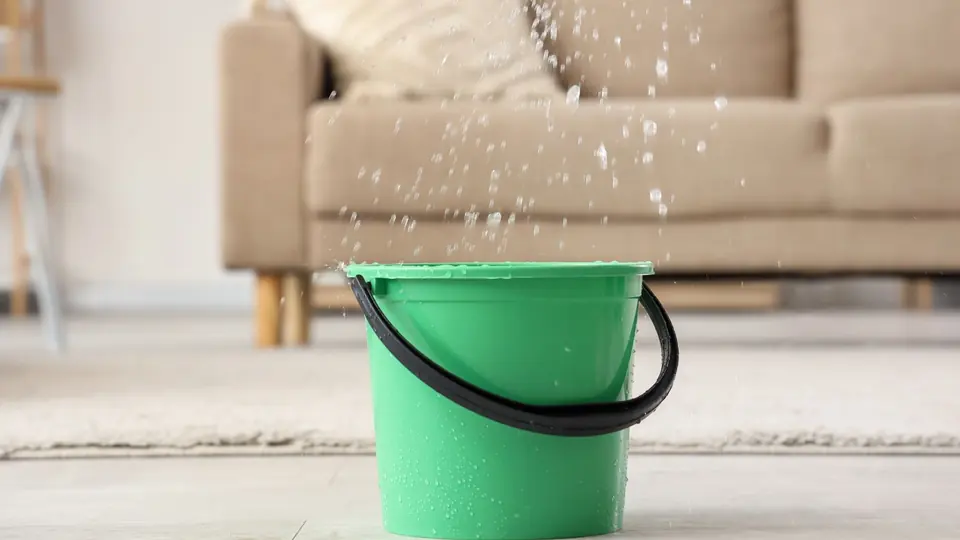
Move furniture and electronics out from under the drip and set a bucket or tub beneath it. If a ceiling is bulging with trapped water, a small hole at the lowest point can let it drain into a bucket instead of collapsing on its own. Stay out of any room where water is near a light fixture or outlet.
How rain gets past a roof in this part of Los Angeles County
Rain here is concentrated in winter. The National Weather Service 1991 to 2020 normals for the Downtown Los Angeles station, which is not a Santa Fe Springs station, show about 14.25 inches a year. January averages near 3.29 inches and February near 3.64, with almost none from June through August.
A roof that sat through a dry summer in the sun can crack at a seal or lift at a shingle, so the first storm is when the weakness shows.
That pattern means the checking belongs before the rain season, not during it. LA County Ready advises clearing gutters and storm drains and keeping plastic sheeting on hand before storms. If a leak appears anyway, the water usually runs along the underside of the roof deck and drops at a spot well away from the actual opening.
Water still spreading? The dispatch line is open 24 hours a day.
☎ Call (562) 271-5850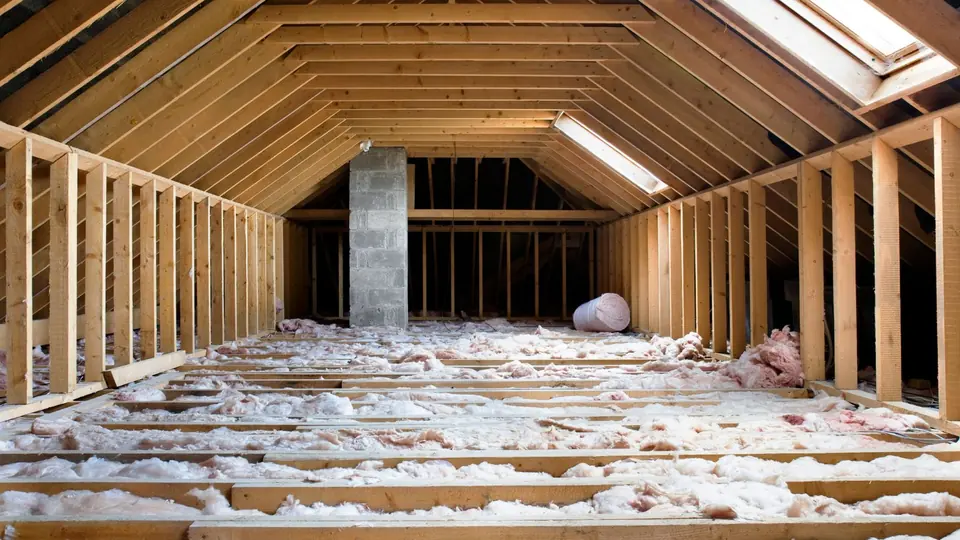
What a roof leak looks like indoors
Few leaks announce themselves with a flowing stream. More often the signs build for days or weeks.
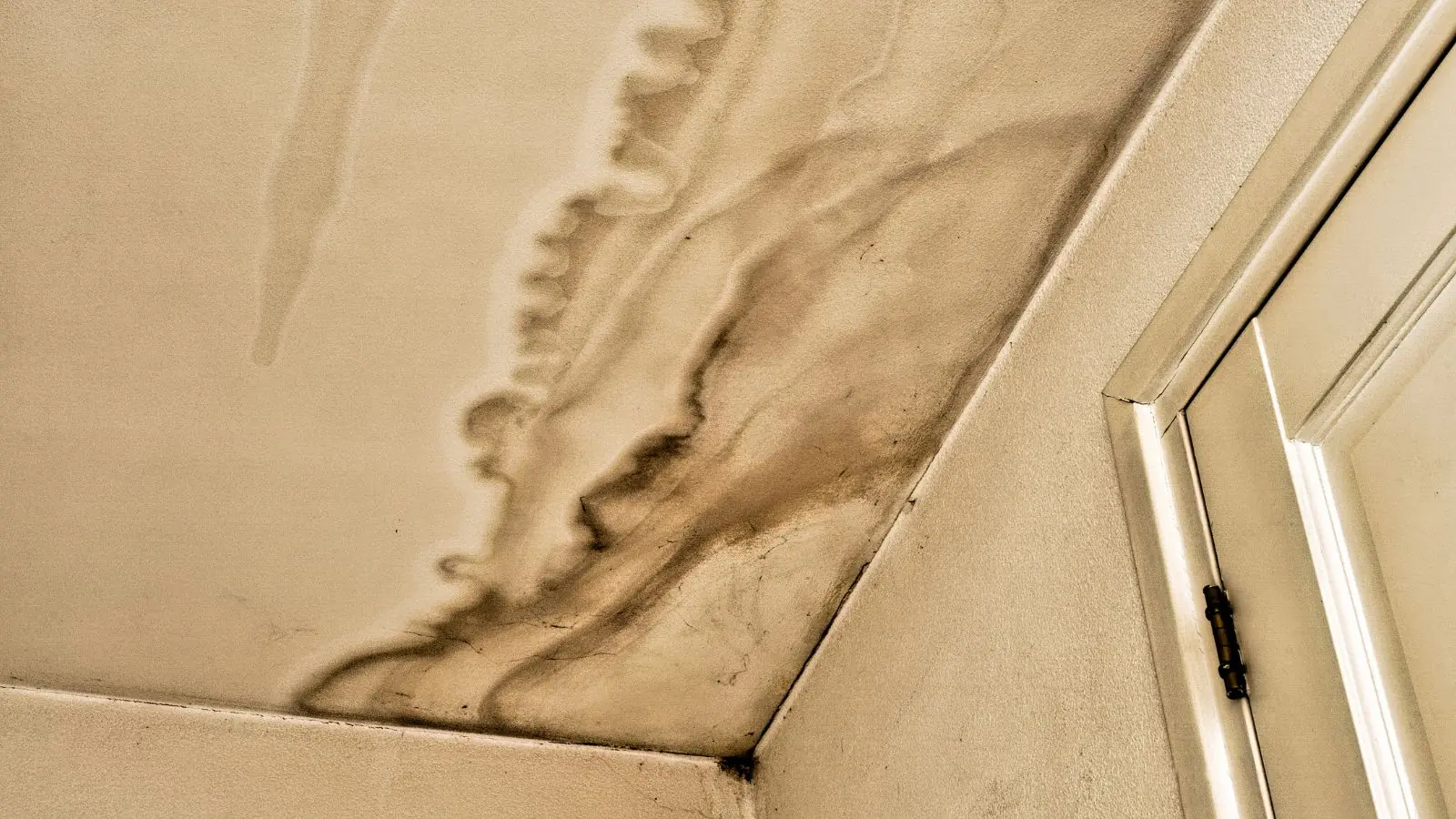
- ✓Brown or yellow ceiling stains. Rings that grow after each rain point to a repeating source above.
- ✓Sagging or bulging drywall. Water pooled in the ceiling is heavy, and the board can fail without warning.
- ✓Peeling paint near the ceiling line. Moisture is working down inside the wall from the top plate.
- ✓Dark, damp attic insulation. Compressed, stained insulation no longer works and holds moisture against framing.
- ✓A musty smell after rain. Hidden damp materials give off an odor well before mold shows.
Roof leak safety: the first hour
Never climb onto a wet roof to look for the hole. Falls from roofs cause serious injuries, and a roofer has the harnesses and the training. From inside, you can photograph the stain and the dripping point and leave the rest to a professional.
If water is dripping through a ceiling fixture or fan, switch the circuit off at the panel only if you can reach it on dry floor. If you cannot, stay out of the room and call the utility or 911 before you call the restoration line. A ceiling that is sagging can drop plaster and water at once, so keep people and pets out from under it.
What we do inside after the roof is sealed
The roofer repairs the opening, and we dry what the water reached. We scan ceilings, walls and attic space with moisture meters and a thermal imaging camera, which shows wet insulation that looks normal from below. Readings are logged at the start so progress is measurable.
Wet drywall that has swelled or has broken seams is removed. Saturated insulation is pulled and bagged, and framing is dried with air movers and LGR dehumidifiers. A HEPA air scrubber can run during the removal to capture dust. Once readings match dry reference materials, you can schedule drywall repair and paint, or ask us about the wider water damage repair scope.
Who handles which part of a roof leak
| Task | Who does it | Why it matters |
|---|---|---|
| Finding and sealing the roof opening | Licensed roofer | Stops new water from entering |
| Temporary tarp or plastic cover | Roofer or homeowner | Limits damage until repair is possible |
| Extraction and drying of interior materials | Water damage crew | Keeps wet framing and insulation from staying damp |
| Drywall, paint and finish work | Rebuild contractor | Only after readings match dry reference materials |
Restoration is not waterproofing. Drying does not make a roof watertight.
Insurance and roof leaks: a quick read
Sudden damage from a storm opening in the roof may be covered, while wear and tear on an aging roof often is not. Water that comes up from the ground or floods in at the door is flood damage, and the California Department of Insurance says standard homeowners insurance does not cover it. Policies differ, so check your policy or ask your insurer how your loss is classified.
Photograph the stain, the ceiling and any damaged belongings before cleanup. We record moisture readings and the work performed. We cannot promise any outcome from a claim.
What shapes the cost of roof leak cleanup
- ✓How much insulation is saturated and how large the ceiling area is
- ✓Whether the water ran into wall cavities and reached the floor
- ✓The ceiling and wall materials, such as drywall, plaster or textured finishes
- ✓How many days of drying equipment the framing needs
- ✓How much drywall must be removed and rebuilt after drying
Want your real number? Call and describe the loss, and the scope and price are explained before work starts.
Mistakes to avoid after a roof leak
- 1Painting over a ceiling stain before the insulation above it is dry
- 2Leaving a bulging ceiling in place instead of draining it safely
- 3Climbing up to patch the roof yourself in wet weather
- 4Assuming a leak is gone because the rain stopped
- 5Skipping the attic check, where wet insulation can hide for weeks
Local, licensed and insured
Licensed and insured crews explain the scope and price first, then start work. The city's Building and Safety Division says its building permits cover re-roofing, so ask the division before your roofer starts if the repair is large. Your roofer or contractor will know whether the job needs one.
We serve Santa Fe Springs and nearby towns, including Downey and Pico Rivera. If the leak came during a heavy storm, our storm water damage cleanup page covers the wider picture.
Frequently asked questions
Yes. The emergency line is answered 24 hours a day, including nights and weekends. Crews are dispatched the same day when they are available, and no arrival time is promised. While you wait, protect belongings and keep people away from sagging ceilings.
The line is answered 24/7 and crews are dispatched same day when available. We do not promise an arrival time. Call and describe what is happening, and we will tell you what to do first while you wait.
No. A licensed roofer repairs the roof. We dry and restore the interior, including wet ceilings, insulation, walls and floors. Having both trades coordinate keeps the inside from being sealed before it is dry.
Insulation that is saturated or compressed usually has to be removed and replaced, because it holds moisture against the framing. Lightly damp insulation can sometimes be dried. A thermal imaging camera and moisture meter show which one you have.
As soon as possible. The EPA advises drying water-damaged areas and items within 24 to 48 hours to prevent mold growth. A ceiling that is bulging or sagging should be drained and cleared the same day because it can fail.
The city's Building and Safety Division says building permits cover re-roofing. Small patches may differ from a full re-roof, so ask the division or your roofer. Interior drying is a separate matter from the roof work.