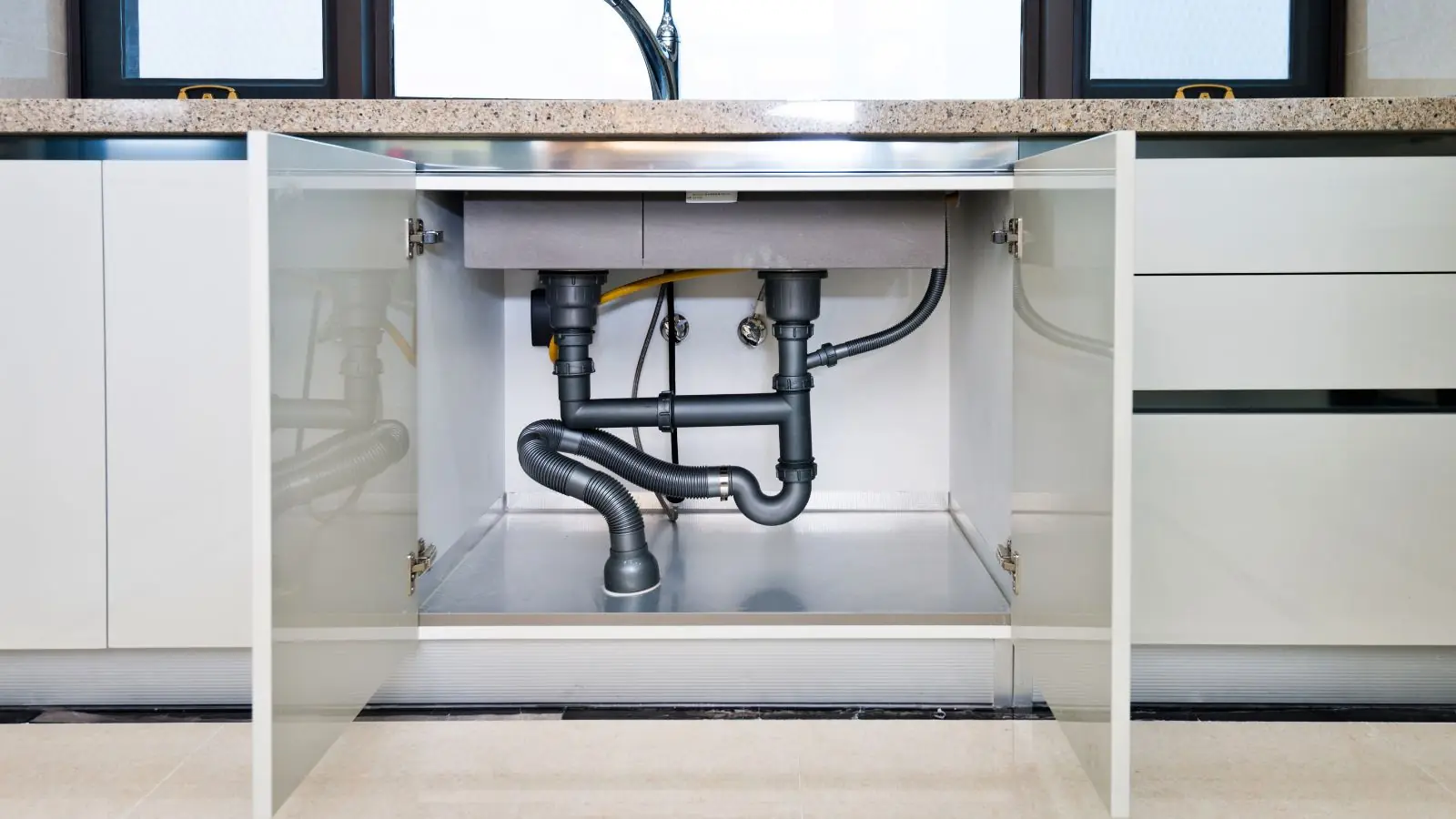
Kitchen water damage: what it is and why the cabinets take the hit
Kitchen water damage is moisture that escapes from a sink, dishwasher, refrigerator line or supply valve and soaks the cabinet boxes, flooring and wall cavities around them. If the leak is still running, call the 24/7 emergency line at (562) 271-5850 and shut the supply valve while you wait. Same-day response is available when crews are available.
A kitchen holds more water sources in one small room than any other space in a house. Particleboard cabinet bases swell when they stay wet, and a slow drip under a sink can run for weeks before a toe-kick bulges.
Kitchen leak safety: the first hour
Kitchens mix water with outlets, cord-plugged appliances and gas lines, so the first steps are about avoiding injury. Close the shutoff under the sink or the main house valve if you cannot find the local one.
- ✓Shut off the valve at the source, or the main valve if the source is unclear.
- ✓Cut power to the kitchen only if the breaker panel is dry and you can reach it without standing in water.
- ✓Do not unplug a dishwasher or refrigerator if water is around the outlet.
- ✓If you smell gas or see water reaching a range outlet, leave and call the utility or 911 before the restoration line.
- ✓Lift small appliances, cookbooks and pantry boxes off the floor and take photos for your insurer.
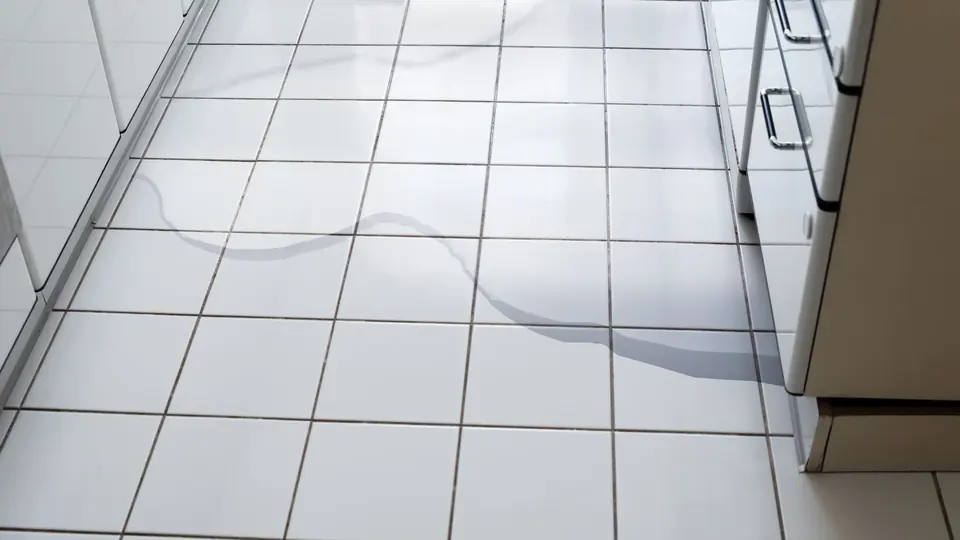
Floor-level water also finds its way under the toe-kick and into the next room, so a puddle that looks small at the sink is rarely the whole picture.
Water still spreading? The dispatch line is open 24 hours a day.
☎ Call (562) 271-5850How water moves through a Santa Fe Springs kitchen
Local homes are a mix of slab-on-grade and raised foundations, and both carry kitchen plumbing in a similar way. Supply lines and drains run through the cabinet base, and on a slab the water spreads across the floor and wicks into the bottom of drywall. On a raised foundation it can also drip through the subfloor into the crawl space below.
The Santa Fe Springs Water Utility Authority's 2024 Water Quality Report says tap water comes from groundwater and imported surface water. That means supply lines are under steady pressure all day, so a failed fitting keeps pushing water until someone closes the valve. Know where yours is before you need it.
Signs your kitchen is wet behind the surface
Surface dryness proves little in a kitchen. These are the signs we look for, and what each one usually means.
Swollen toe-kicks
Edge-swelling at the cabinet base means particleboard has soaked water up from the floor and will not shrink back.
Lifting or cupped flooring
Planks that crown at the seams or vinyl that bubbles point to water trapped under the floor covering.
Musty smell under the sink
A damp, earthy odor suggests a slow leak has been wetting the cabinet floor and the wall behind it.
Soft or stained drywall
Brown rings, bubbling paint or a soft spot near the sink wall show the cavity behind has been wet for a while.
How we dry a wet kitchen
The visit starts with an on-site assessment. A moisture meter checks the cabinet bases, subfloor and lower wall, and a thermal imaging camera shows cool wet zones behind finishes that look dry. No arrival time is promised, but the line is answered around the clock.
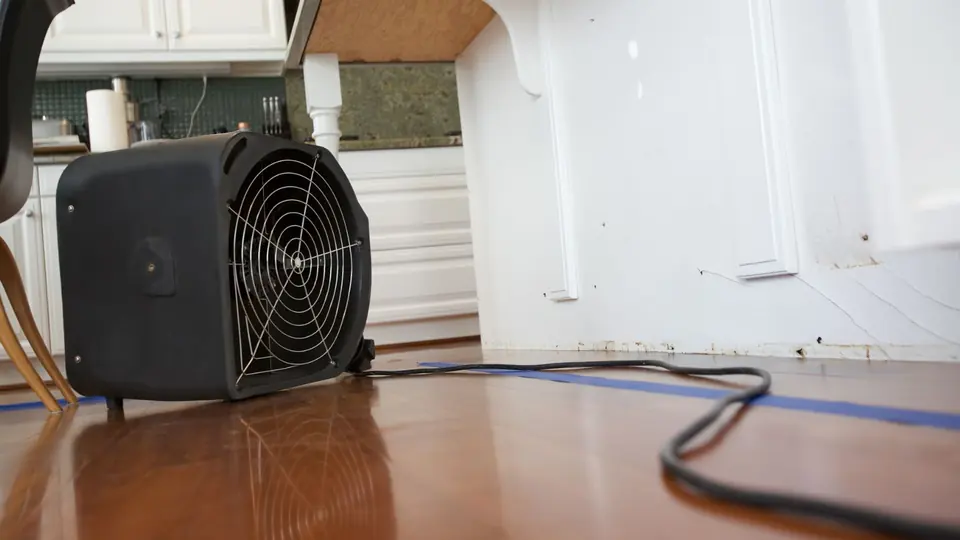
Standing water comes out first with wet vacuums or an extraction unit. Then air movers push dry air across the floor, LGR dehumidifiers pull moisture out of the room, and toe-kicks are often removed so air can reach the cabinet base. Readings are logged each visit until they match dry reference materials, which is the drying goal in the published ANSI/IICRC S500 standard.
Kitchen materials: dry, repair or replace
Different surfaces tolerate water differently, and the honest answer is that some do not survive. The table sorts what we see most often.
| Material | Often dried in place | Often replaced |
|---|---|---|
| Solid wood cabinets | Brief wetting with fast drying | Warped doors or swollen frames |
| Particleboard cabinet base | Rarely, only if barely damp | Swollen or crumbling edges |
| Ceramic or porcelain tile | Tile itself dries well | Loose tile or wet backer and subfloor |
| Vinyl plank or sheet | Planks lifted and dried underneath | Sheet vinyl with trapped water |
| Drywall below the counter | No swelling and seams intact | Soft, bulging or stained panels |
These are general patterns. A moisture reading on your own kitchen decides each case.
Does insurance cover kitchen water damage?
Sudden and accidental water damage, such as a burst supply line or an overflowing dishwasher, is often covered, while a gradual leak or neglected maintenance often is not. Check your policy or ask your insurer how your loss would be treated.
Flood is a different matter. The California Department of Insurance states that standard homeowners insurance does not cover flood damage, so water from outdoors usually needs a separate flood policy. We document readings and photos so your insurer has a clear record to review.
What affects the cost of kitchen water damage work
Kitchens vary more than most rooms, so no single number fits. These factors set the scope.
- ✓Water category, from a clean supply line to contaminated overflow
- ✓Square footage of wet floor, wall and cabinet base
- ✓Materials involved, such as tile, vinyl, hardwood or particleboard
- ✓Equipment count and the number of drying days
- ✓Rebuild scope once the kitchen is dry, which is separate work
Insurance may share some of these costs depending on your policy. Want your real number? Call and describe the loss, and the scope and price are explained before work starts.
Mistakes that make kitchen leaks worse
A few common habits turn a manageable leak into a rebuild.
- 1Wiping the surface and moving on. The U.S. EPA advises drying water-damaged areas within 24 to 48 hours to prevent mold growth, and a dry-looking floor can still hold water below.
- 2Running a household fan only. One box fan cannot dry a cabinet base or a wall cavity.
- 3Sealing wet cabinets with new flooring or paint. Covering damp material traps moisture and hides the problem.
- 4Skipping the permit question. The city's Building and Safety Division says appropriate permits must be obtained before any repair or alteration project, so ask the division what your rebuild requires.
Kitchen water damage help near Santa Fe Springs
Our crews are licensed and insured, and the plan and price are explained before work starts. Crews serve Santa Fe Springs and nearby towns including Norwalk, Downey, Whittier, La Mirada and Pico Rivera.
If the leak began with a dishwasher, washer or ice-maker line, our page on appliance leak damage covers the patterns in more detail. For the drying side, see structural drying and dehumidification, and for rebuilding afterward, see water damage repair. Home base is water damage restoration in Santa Fe Springs.
Frequently asked questions
The emergency line is answered 24/7, and crews are dispatched the same day when available. No arrival time is promised, so shut off the water and keep power safe while you wait.
Most kitchens need several days of drying, depending on how far the water traveled and which materials are involved. Cabinet bases and subfloors dry slower than the surface. We check readings at each visit and stop equipment only when materials match dry reference levels.
Solid wood cabinets that were wet briefly often can be dried. Particleboard bases that have swollen usually cannot, because the fibers do not return to their original shape. A moisture meter and a look at the edges tell us which category yours falls in.
Not always. Tile often dries without removal, but water trapped under vinyl or hardwood may need small openings or lifted planks so air movers can reach it. We explain what needs to open before work starts.
A licensed plumber or appliance technician repairs the source. We handle the water extraction, drying and documentation. Fixing the leak first matters, because drying a kitchen that is still leaking accomplishes nothing.
Close the water supply valve first. Only unplug the unit or touch its breaker if the outlet and panel are dry and you can reach them without standing in water. If water reaches an outlet, stay out and call the utility or 911.