Appliance leak water damage in plain terms
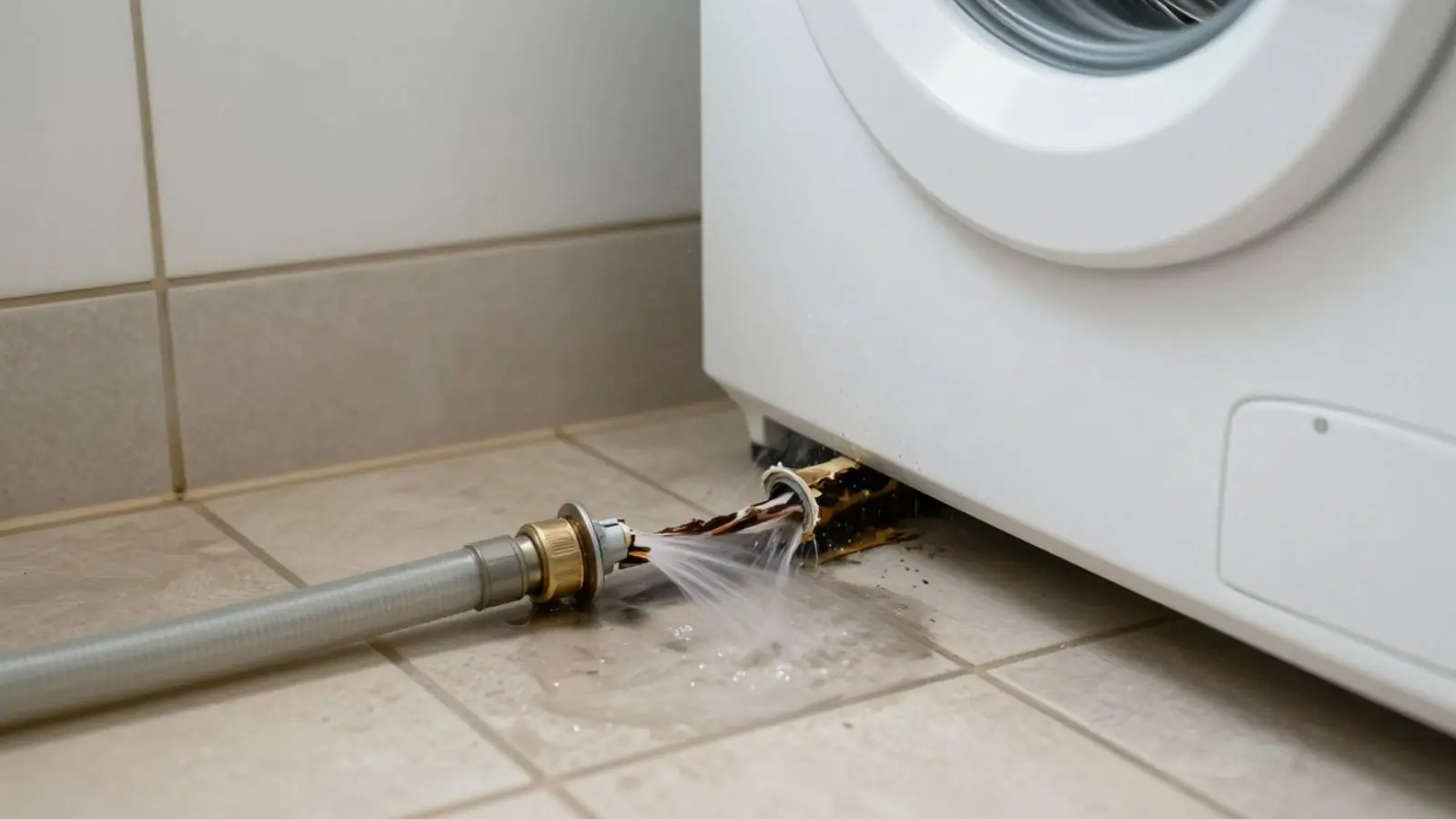
Appliance leak water damage is the wetting of floors, cabinets and walls by water from a washing machine, dishwasher, refrigerator ice maker or similar appliance. The water often runs under the unit for hours before anyone sees it. If your floor is wet now, call our 24/7 emergency line at (562) 271-5850.
Unplug the appliance only if the outlet is dry and you are not standing in water. Close the shutoff valve behind or beside it. Soak up what you can with towels, lift anything that wicks water off the floor and keep the area ventilated.
Where appliance leaks usually start
Different machines fail in different places, and knowing the spot helps predict where the water went.
- ✓Washer supply hose or valve. A hose that bursts under pressure can empty a laundry room onto the floor within minutes.
- ✓Dishwasher inlet or door seal. Water runs into the cabinet base and under the kitchen floor.
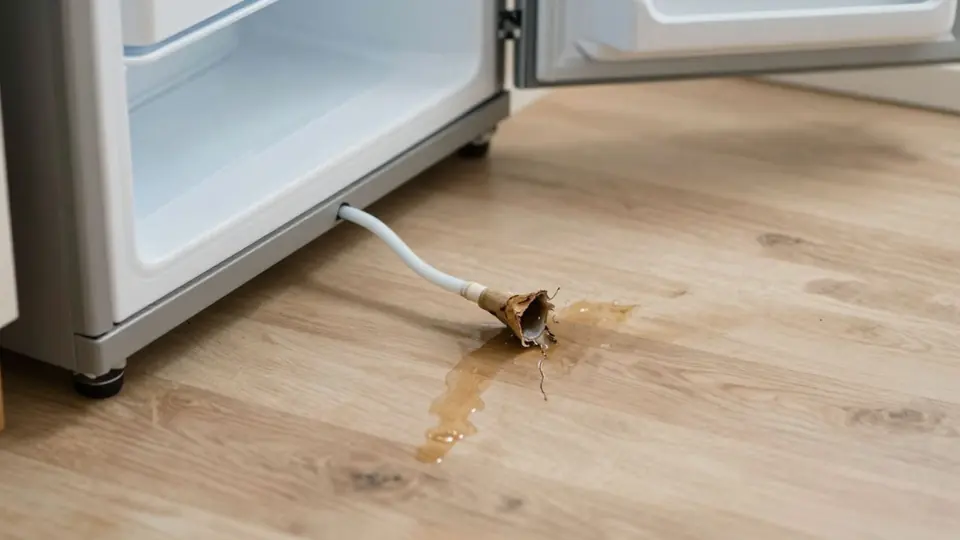
- ✓Refrigerator ice maker line. A small tube leaks slowly behind the unit, so damage builds out of sight.
- ✓Drain hose or standpipe overflow. Water backs up and spills out at the wall.
- ✓Water softener or portable AC condensate line. Slow drips stain the floor beside the unit for weeks.
Water still spreading? The dispatch line is open 24 hours a day.
☎ Call (562) 271-5850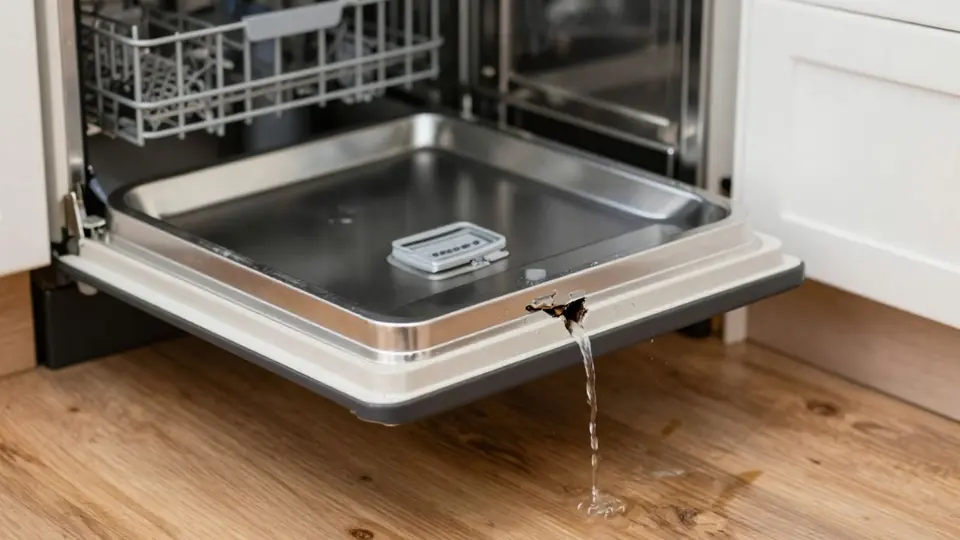
Why this happens so often in homes here
Census QuickFacts reports that about 60.6 percent of Santa Fe Springs households own their homes, so many appliances are installed, moved and repaired by owners rather than a landlord's maintenance crew. A hose reconnected without a snug fit or an old rubber supply line that has hardened can fail without warning. Check hoses and shutoff valves a couple of times a year.
Many local homes sit on a concrete slab and others on raised foundations. On a slab, water from a laundry room or kitchen spreads across the surface and under walls. On a raised foundation, it can drain through the subfloor into the crawl space, where it soaks insulation you cannot see.
Appliance leak safety: the first hour
Appliances combine water with electricity. If water has reached an outlet, a power strip or the breaker panel, stay out of the room and call the utility or 911 for the electrical risk before you call the restoration line. Cut power only if the panel is on dry floor.
Gas dryers and ranges add another risk. If you smell gas, leave the house and call the gas utility or 911. Avoid lifting heavy machines yourself, because a wet floor and a loaded washer can injure your back or crush a foot.
How we find and dry water from an appliance
The visible puddle is rarely the whole story. We use moisture meters and a thermal imaging camera to trace water under cabinets, along baseboards and into the wall behind the appliance. The scan shows where wet material ends, so we only open what has to be opened.
Extraction units and wet vacuums remove standing water, then air movers and LGR dehumidifiers run until readings match dry reference materials, the goal described in ANSI/IICRC S500. Wet toe kicks, swollen particleboard and soaked underlayment are removed when drying cannot save them. For kitchen losses, see our kitchen water damage page, and for a general overview of the work see water mitigation.
Which appliance, which damage, which fix
| Appliance | Where water travels | Typical response |
|---|---|---|
| Washing machine | Laundry floor, hallway and adjoining rooms | Extract, lift wet flooring, dry wall bases |
| Dishwasher | Cabinet base and kitchen subfloor | Pull toe kick, dry cabinet and subfloor |
| Refrigerator ice maker | Under the unit and along the wall | Pull the unit, scan behind, dry flooring |
| Water softener or AC condensate | Floor beside the unit | Locate source, dry and monitor for mold risk |
Dry-in-place or removal is decided by moisture readings.
Insurance and appliance leaks
A hose that suddenly bursts or a dishwasher that overflows is the sort of sudden and accidental event that is often covered. A drip that went on for months behind a refrigerator often is not. Check your policy or ask your insurer what applies, because the line between sudden and gradual decides many claims.
The appliance itself is usually not part of a water damage claim, so ask about that separately. We keep readings and photos of the work. We cannot promise any claim outcome.
What drives the cost of appliance leak cleanup
- ✓How long the water ran before it was found
- ✓How many rooms and how much flooring got wet
- ✓Flooring type, such as tile, laminate, hardwood or carpet
- ✓Whether cabinets, walls or subfloor need removal
- ✓The days of drying equipment the structure requires
Want your real number? Call and describe the loss, and the scope and price are explained before work starts.
Mistakes to avoid after an appliance leak
- 1Pushing the appliance back into place before the floor under it is dry
- 2Mopping and calling it done while the cabinet base stays wet
- 3Waiting past the EPA's 24 to 48 hour drying window
- 4Reusing an old hose to reconnect the machine
- 5Ignoring a musty smell that appears a few days later
Local, licensed and insured
Before work starts, the scope and price are laid out by a licensed and insured crew. The city's Building and Safety Division says appropriate permits must be obtained before projects that include alterations or repairs, so ask the division whether your cabinet or plumbing repair needs one. The cleanup itself is separate from that question.
We serve Santa Fe Springs and nearby towns, including Norwalk and Downey. If the water has already spread through several rooms, our water damage cleanup page explains what the full job involves.
Frequently asked questions
The line is answered 24/7 and crews are dispatched same day when available. We do not promise an arrival time. Call and describe what is wet, and we will tell you what to do while you wait.
No. An appliance technician or plumber repairs or replaces the machine. We handle the water extraction, drying and cleanup of the structure around it.
Close the shutoff valve on the wall and unplug the machine if the outlet is dry. Then call us. Do not leave towels as the only response, because water travels under baseboards and into walls.
Yes. A small ice maker line can drip for weeks behind the unit. Swollen baseboard, a soft floor or a musty smell are signs. A moisture meter and thermal camera find the wet area without tearing everything out.
Many appliance losses dry in a few days, though thick flooring or wet cabinet bases can take longer. Equipment stays until readings match dry reference materials. The EPA advises drying within 24 to 48 hours to prevent mold growth.
Not always. Tile often survives, while laminate and some wood flooring may swell and cup. Carpet and pad that stay wet beyond the EPA's 24 to 48 hour window often have to be replaced.